Hardware architecture
Block-level definition of processing, power, sensing, interfaces and communication, with the trade-offs stated before detailed design starts.
T · [CLIENT TO PROVIDE] E · [CLIENT TO PROVIDE]
Overview
Hardware engineering is the point where a product idea meets physics. Supply rails, noise, thermal behaviour, mechanical space, component availability and unit cost all interact, and the decisions made in the first weeks set the ceiling for everything that follows.
We start by turning requirements into an electronic architecture: what has to be measured or controlled, how fast, how accurately, on what power budget, and under what environmental conditions. Only then do we choose topologies and components.
That architecture becomes schematics, board designs and physical prototypes that we measure rather than assume. Where a requirement cannot be met as written, we say so early and show the trade-off, because a constraint discovered at prototype stage is far cheaper than one discovered at production.
Engineering principles
Discipline
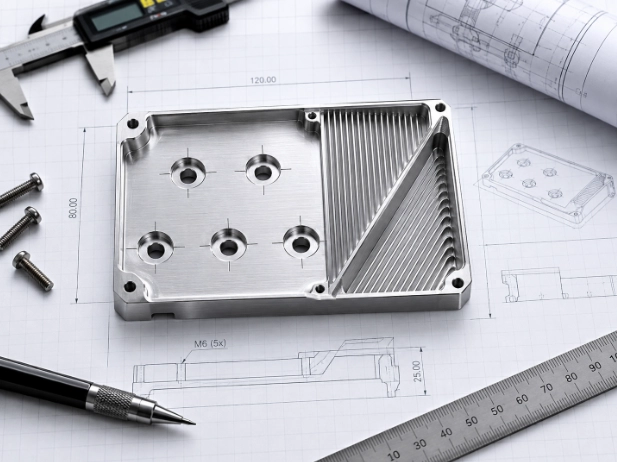
Supply rails, noise, thermal behaviour, mechanical space and unit cost interact constantly. A hardware design is the arrangement of those forces that leaves the product able to do its job for years.
We resolve them in the open: the trade-off is stated, the alternative is compared, and the reasoning is recorded where the next engineer will find it.
What we engineer
Most products need several of these at once. We design them as one system so the interfaces between them are deliberate.
Block-level definition of processing, power, sensing, interfaces and communication, with the trade-offs stated before detailed design starts.
Signal conditioning, amplification, filtering and conversion paths engineered for the accuracy and noise environment the product will actually face.
Supply architecture, conversion stages, sequencing, protection and power budgeting, including behaviour at brown-out and cold start.
Processor and memory subsystems, high-speed interfaces, clocking and reset strategy, and the timing constraints firmware will inherit.
Selection weighed on performance, availability, second sourcing and lifecycle, so a design is not built on parts that disappear in two years.
Structured bring-up of first hardware, with instrumented measurement of rails, signals, timing and thermal behaviour against the design intent.
Trade-offs
| Constraint | Pulls against | How it is resolved |
|---|---|---|
| Performance | Power consumption and thermal headroom | Duty-cycled operation, right-sized processing, measured power profiling per operating state |
| Board size | Routing density, thermal spread and serviceability | Stack-up planning, component height and placement zoning, early mechanical alignment |
| Unit cost | Component quality and design margin | Cost modelling at architecture stage, margin placed where failure is expensive |
| Signal accuracy | Noise from power and digital switching | Partitioned layout, reference plane strategy, filtering designed rather than added late |
| Component availability | Optimal technical choice | Second-source evaluation and lifecycle review during selection, not after release |
How we work
A sequence designed to surface risk early, while changes are still inexpensive.
Functional needs, environment, power budget, size, cost target, interfaces, lifecycle expectations and anything already fixed by the rest of the product.
Block diagram, power tree, interface map and the technical risks that need resolving first. Alternatives are compared rather than assumed.
Schematic capture with design intent documented — why a topology, why a part, what the tolerances are and what happens at the limits.
Stack-up, placement and routing driven by the electrical requirements, with mechanical and thermal constraints respected from the start.
Physical boards built, powered in a controlled sequence and measured. Findings are written down, not remembered.
Design updates driven by measurement, followed by verification against the original requirements.
Documentation, test points, build data and the information a manufacturer needs to build the same board repeatedly.
Applications
The same engineering discipline is applied across very different products. The constraints change; the method does not.
FAQ
Practical answers to what teams usually ask before starting a hardware project.
As early as the requirements are stable enough to argue about. Architecture decisions constrain everything downstream, so involving hardware engineering while requirements are still being shaped usually prevents expensive redesign later.
Yes. We can review an existing design, identify the risks and either improve it in place or rework the parts that will not meet the requirement. A review and measurement exercise is often the sensible first step.
We do. Hardware and firmware are engineered against each other on most of our projects, which removes a common class of integration problems. They can also be delivered separately if your team owns one side.
Availability, second sourcing and lifecycle status are part of component selection rather than a later check. Where a part is single-sourced, that is flagged as a design risk with an alternative identified.
Schematics, board design files, a bill of materials, design documentation, measurement evidence from bring-up and the manufacturing data package agreed at the start of the project.
Next step
Send us the constraints — power, size, environment, cost, timeline — and we will tell you what is realistic.